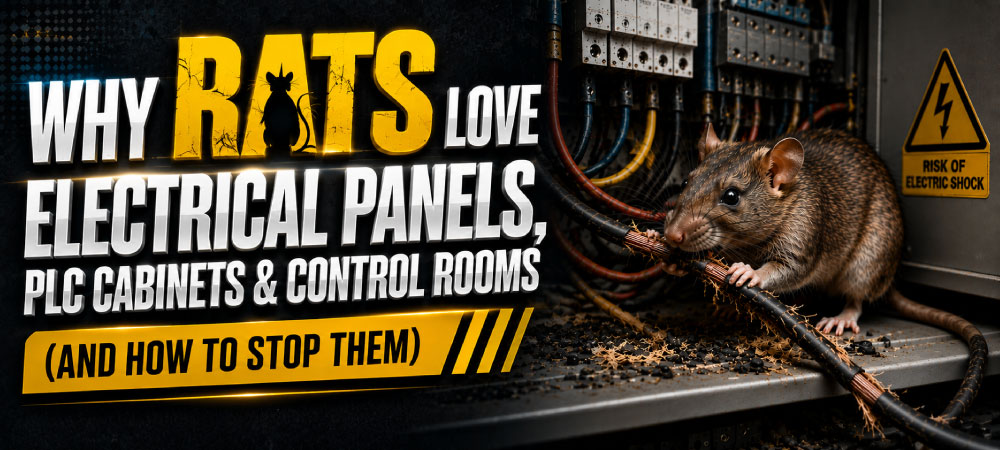
Why Rats Love Electrical Panels, PLC Cabinets & Control Rooms (And How to Stop Them)
Electrical panels, PLC cabinets, MCC panels, and control rooms are the nervous system of any industrial facility. Unfortunately, they also happen to be one of the favorite hiding places for rodents.
A single rat inside an electrical enclosure can chew through wiring, damage expensive electronic components, trigger equipment failures, and even cause electrical fires. The resulting downtime often costs far more than the repair itself.
In this blog, we’ll explore why rodents are attracted to electrical panels, the risks they pose, and the most effective ways to protect your critical equipment.
Why Do Rats Enter Electrical Panels?
1. Warm Environment
Transformers, power supplies, contactors, VFDs, and other electrical components generate heat.
Rodents naturally seek warm spaces, especially during cooler months.
2. Safe Shelter
Electrical enclosures offer:
- Protection from predators
- Minimal human disturbance
- Dark enclosed spaces
- Ideal nesting locations
These conditions make control cabinets attractive nesting sites.
3. Wiring Makes Perfect Nesting Material
Rats constantly gnaw to keep their teeth from overgrowing. Inside electrical panels, they chew:
- Cable insulation
- Communication cables
- Sensor wiring
- Fiber conduits
- Flexible tubing
They also use shredded insulation as nesting material.
4. Food Sources Nearby
Factories often have:
- Food waste
- Packaging materials
- Grain storage
- Cafeterias
- Dust accumulation
These nearby food sources encourage rodent activity around electrical installations.
What Damage Can Rodents Cause?
Cable Damage
Chewed insulation can expose live conductors, leading to:
- Short circuits
- Ground faults
- Signal failures
Equipment Failure
Rodent damage can affect:
- PLCs
- HMIs
- Variable Frequency Drives (VFDs)
- Industrial PCs
- Control relays
- Sensors
Even minor cable damage can halt an automated production line.
Fire Hazards
Exposed conductors increase the risk of:
- Electrical arcing
- Sparks
- Overheating
- Fire inside the enclosure
Production Downtime
Unexpected shutdowns may result in:
- Lost production
- Missed delivery schedules
- Emergency maintenance
- Increased labour costs
Expensive Repairs
Replacing:
- Wiring harnesses
- PLC modules
- Industrial controllers
- Custom cables
can quickly become costly.
Warning Signs of Rodent Activity
Maintenance teams should watch for:
- Chewed wires
- Droppings
- Nesting materials
- Gnaw marks
- Unusual burning smell
- Frequent breaker trips
- Random PLC faults
- Communication failures
Why Traditional Rat Control Often Falls Short
Many facilities rely on:
- Rat poison
- Glue traps
- Snap traps
However, these methods have limitations:
- They require regular maintenance.
- Dead rodents can create hygiene issues.
- Poison may not be suitable near food or sensitive equipment.
- They address existing infestations rather than discouraging rodents from entering in the first place.
A Preventive Approach: Ultrasonic Rodent Repellents
Industrial ultrasonic rodent repellents work by emitting ultrasound waves that create an uncomfortable environment for rodents, encouraging them to avoid protected spaces.
Unlike traps or poison, ultrasonic systems offer continuous protection while operating silently and without chemicals. GIZMOCAT® is designed for 24×7 operation, is maintenance-free, and is suitable for electrical panels, PLC cabinets, server rooms, CNC machines, and other enclosed industrial spaces.
Proper Installation Matters
A common misconception is that one ultrasonic device can protect an entire factory.
In reality:
- Ultrasonic waves travel in straight lines.
- Walls, machinery, partitions, and storage racks reduce coverage.
- Large facilities typically require multiple strategically placed units based on layout and enclosure size.
If you’re planning to protect your facility, don’t rely on unrealistic coverage claims or one-size-fits-all solutions. Start with a professional site assessment, identify high-risk areas, and choose a rodent protection system engineered for your specific application.
Protect your equipment before rodents turn a minor problem into a major operational failure.

